Some of the most affordable homes in Eastern Pennsylvania, neighborhood by neighborhood — from restored Victorians in Centre Park to brick twins bordering Wyomissing.
Reading, PA has some of the most affordable homes in Eastern Pennsylvania, with a median home value of roughly $160,000 inside city limits. Centre Park is known for restored Victorian homes, College Heights near Albright College is typically the city's priciest neighborhood, Millmont borders Wyomissing on the west and Penn's Common surrounds the 50 acre City Park. Buyers should budget for Reading's higher local taxes, including a 5% total realty transfer tax and one of the highest local earned income taxes in the state.
Reading gets talked about as one city, but it's really a patchwork of very different neighborhoods. A few blocks can take you from grand Victorian rowhomes to quiet streets of 1920s twins to a hillside campus with views of the Pagoda.
This guide walks through the neighborhoods buyers ask us about most, what the homes look like and the costs that are specific to buying inside the city. For a broader look at the city, visit our Reading community page.
$160K
City median home value
$282.5K
College Heights listing
5%
Total realty transfer tax
$150K
Penn's Common median
Sources: NeighborhoodScout city and Penn's Common median values; Homes.com recent listing data for College Heights.
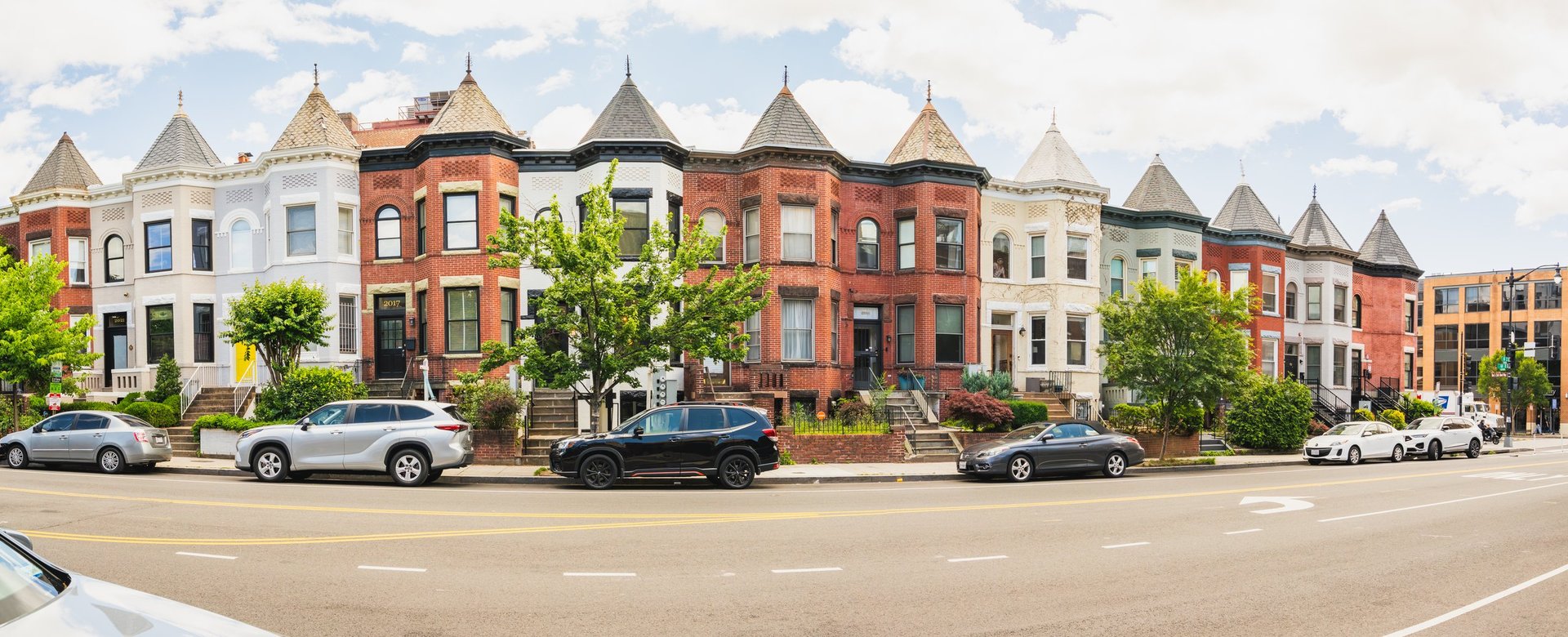
Inside city limits, Reading is a city of rowhomes and twins, with detached houses concentrated on the edges. Prices are low by regional standards. NeighborhoodScout puts the median home value within the city boundary at about $160,000.
One thing to know before you start searching: a Reading mailing address doesn't always mean the City of Reading. Many homes in Wyomissing, Spring Township, Exeter Township and other suburbs carry Reading addresses, and that changes your taxes and school district. It's also why some websites show a much higher "Reading" home value than you'll find in the city itself. If the suburbs are on your list, our Wyomissing community page is a good place to compare.
| Neighborhood | Typical Housing | Price Point |
|---|---|---|
| Centre Park | Three story Victorian rowhomes and twins | Varies widely by condition |
| College Heights / Hampden Heights | Early 1900s singles and twins | ~$282.5K listing |
| Millmont | Modest twins and singles on quiet blocks | City prices, suburban access |
| Penn's Common / Southeast | Early 1900s brick rowhomes | ~$150K median |
| Glenside / Northmont | Solid brick twins with porches and yards | Often below College Heights |
| Downtown / Callowhill | Apartments, converted lofts, historic rowhomes | Wide range |
Sources: NeighborhoodScout; Homes.com recent median listing price for College Heights.
Just north of downtown, Centre Park is where Reading's industrial era wealth built its showpiece homes. The streets are lined with three story Victorian rowhomes and twins, many with original woodwork, stained glass and tall ceilings. The Centre Park Historic District has an active neighborhood association that works to preserve the architecture.
This is a neighborhood for buyers who love old houses and don't mind the work that comes with them. Some homes have been fully restored, while others are waiting for the right owner. Sale prices vary a lot depending on condition, so it's worth touring several to calibrate.
In Reading's northeastern corner, College Heights grew up around Albright College, which moved to its current campus in 1929. Hampden Heights sits right alongside it. Together they offer some of the city's most suburban feeling streets, with early 20th century singles and twins, mature trees and Hampden Park next door.
Mount Penn Preserve and its trails are close by, and the Reading Pagoda, built in 1908, watches over the neighborhood from the ridge. College Heights is typically Reading's most expensive neighborhood, with a recent median listing price around $282,500 according to Homes.com.
$282.5K
Recent median listing
Singles & twins
Early 20th century housing
1908
Reading Pagoda on the ridge
Good to know: College Heights is the city's priciest pocket, so it pays to compare nearby Glenside and Northmont if you want similar 1920s housing without the premium.
Millmont sits on Reading's west side along the Wyomissing line, close to the Reading Public Museum and its planetarium. Housing is mostly twins and modest singles on quiet residential blocks, and the neighborhood feels closer in character to its suburban neighbor than to downtown.
For buyers who want city prices with easy access to Wyomissing's shopping, Reading Hospital and the Route 422 corridor, Millmont is one of the more practical choices in the city.
Wyomissing line
West side location
Twins & singles
Quiet residential blocks
Route 422
Easy suburban access
Penn's Common surrounds City Park, a roughly 50 acre green space with a bandshell, basketball courts and a splash pad. The neighborhood is made up of early 1900s brick rowhomes on dense, walkable blocks, and it's one of the most diverse parts of the city.
This is also one of Reading's most affordable areas, with median values around $150,000 according to NeighborhoodScout. It draws first time buyers, investors and anyone who wants to walk to the park and downtown. As with any older housing stock, a thorough inspection is a must.
$150K
Median home value
50 acres
City Park green space
Brick rowhomes
Early 1900s housing stock
Our advice: on any century old rowhome, budget for a full inspection and ask about the roof, electrical panel and knob and tube wiring before you negotiate.
North of downtown, Glenside and Northmont filled in with semi detached homes in the decades after 1915. Today they offer rows of solid brick twins with front porches and small yards, the kind of starter home that has worked for generations of Reading families.
These neighborhoods are quieter than the city center and often a bit more affordable than College Heights, making them worth a look for buyers who want more space than a rowhome without leaving the city.
Brick twins
Built after 1915
Porches & yards
More space than a rowhome
Quieter blocks
North of downtown
Downtown along Penn Street is home to the Santander Arena, the Santander Performing Arts Center, the GoggleWorks Center for the Arts and a growing restaurant scene. Housing here leans toward apartments, converted lofts and historic rowhomes in nearby districts like Callowhill.
Downtown has seen real investment in recent years, and buyers interested in that story should read our guide to Reading and Wyomissing real estate, which covers the city's revival alongside its suburban neighbor.
Santander Arena
Events on Penn Street
GoggleWorks
Arts center downtown
Lofts & condos
Apartments and conversions
Reading's low prices come with a few costs that are higher than in the suburbs. Factor them in from the start.
The City of Reading charges a 5% total transfer tax, compared with 2% in most of Berks County. Buyer and seller customarily split it, so on a $200,000 home each side would pay about $5,000, though the split is negotiable.
City residents pay a combined city and school district earned income tax of about 3.6%, among the highest in Pennsylvania. Most Lehigh Valley and Berks County suburbs charge closer to 1% or 2%.
The Reading School District earns low marks on Niche, and many families look at charter schools or weigh the suburbs for that reason.
Much of the housing stock is a century old, so budget for inspections and updates.
Even with those costs, many buyers find Reading's purchase prices leave room in the budget that would be hard to find elsewhere in the region.
Whether you're drawn to a Victorian in Centre Park or a twin near Albright, the Chris Troxell Team can help you compare neighborhoods, confirm which municipality a home is actually in and plan for local taxes.
Serving Allentown, Bethlehem, Reading and communities across Eastern Pennsylvania.