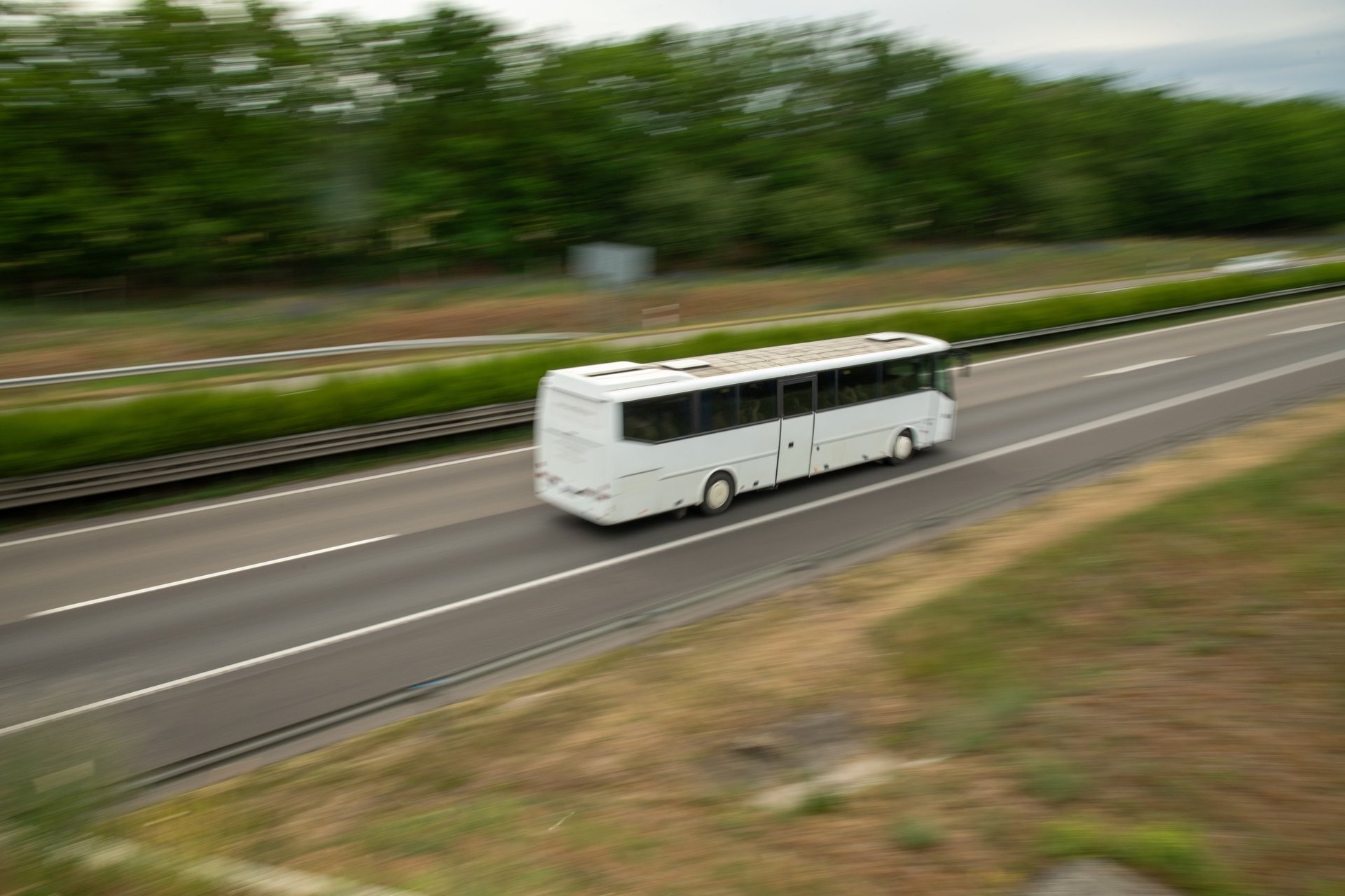
A white bus moves quickly on a highway. The road stretches ahead while green trees line the sides. Clouds fill the sky as the bus continues its journey.
Commuter Guide

The Lehigh Valley Commuter's Guide: Train, Bus, Highway and Hybrid Options in 2026

Published: September 2026 Author: Chris Troxell Team Lehigh Valley Real Estate, Commuter Guide

There is no commuter rail connecting the Lehigh Valley to Philadelphia or New York City in 2026. The primary transit option for NYC commuters is Trans-Bridge Lines motorcoach service, which runs daily from the Allentown Bus Terminal, Bethlehem Transportation Center, Lehigh Valley Airport (ABE), William Penn Park and Ride, Easton Intermodal Transportation Center and Hellertown Park and Ride. Cash fares run $65 one-way; advance purchase fares are $58.50. Philadelphia service is also available via Trans-Bridge from Bethlehem and Allentown. Within the Lehigh Valley, LANTA operates 37 routes including an Enhanced Bus Service (EBS) rapid transit corridor between Allentown and Bethlehem running every 15 minutes. For car commuters, I-78, Route 22, Route 309 and the PA Turnpike form the main highway grid. This guide covers every practical commute corridor from the Lehigh Valley in specific detail.

Passenger Rail

None

No train service to NYC or Philadelphia

Trans-Bridge to NYC

$58.50

Advance one-way fare, ~2 hr 15 min

LANTA Routes

37

Regional routes, $2 cash fare

One of the first things buyers relocating from the New York or Philadelphia metro areas ask about is the commute. And one of the first things they discover is that the Lehigh Valley's transportation infrastructure looks very different from what they are used to. No SEPTA rail. No NJ Transit connection. No Amtrak commuter corridor. If you want to get from Allentown to Midtown Manhattan on a weekday morning, you have a few options, none of which involve a train.

That is not as limiting as it sounds. The options that do exist are practical for most hybrid and occasional commuters, and the highway infrastructure is genuinely excellent for drivers. But it does require a clear-eyed assessment of your specific commute situation before you choose where to live, not after. This guide gives you the specifics.

The State of Passenger Rail in the Lehigh Valley in 2026

The Lehigh Valley has no passenger rail service. There is no Amtrak stop in Allentown, Bethlehem or Easton. There is no commuter rail connection to Philadelphia, New York or anywhere else. If you want to take a train, the closest Amtrak station is in Trenton, New Jersey, about an hour's drive east of Easton, from which Northeast Corridor trains run to New York Penn Station and Philadelphia.

A passenger rail feasibility study connecting the Lehigh Valley to Philadelphia was completed a couple of years ago, and it outlined potential future corridors. It is a planning document, not a funded project, and no construction timeline exists. A restored service would realistically take a decade or more to materialise even if funding were secured tomorrow. Buyers evaluating the Lehigh Valley should plan around the current reality rather than a hypothetical future one.

The closest Amtrak station to the Lehigh Valley is in Trenton, New Jersey — roughly an hour's drive east of Easton — where Northeast Corridor trains run to both New York Penn Station and Philadelphia.

Trans-Bridge Lines to New York City: Routes, Fares and What to Expect

Trans-Bridge Lines is the Lehigh Valley's primary connection to New York City, and for hybrid commuters who need to be in Manhattan a few days a week, it works well. The company has been running motorcoach service from the Lehigh Valley since 1941 and handles about 3,688 weekday riders.

The main Allentown to New York route makes stops at the Allentown Bus Terminal on Linden Street, the Bethlehem Transportation Center, Lehigh Valley International Airport (ABE), the William Penn Park and Ride at the Route 33 and William Penn Highway junction, the Easton Intermodal Transportation Center and the Hellertown Park and Ride on Silvex Road near the I-78 interchange, before continuing to Clinton, New Jersey and then into New York City. The primary New York destinations are Port Authority Bus Terminal at 42nd Street and Newark Airport.

A separate Wall Street route departs from Lehigh Valley Airport, William Penn Park and Ride and Annandale Square in New Jersey, serving Lower Manhattan and Jersey City on weekdays.

Route Cash One-Way Advance One-Way Round-Trip Advance
Allentown to Port Authority / Newark Airport $65.00 $58.50 $117.00
Bethlehem TC to Port Authority / Newark Airport $65.00 $58.50 $117.00
Easton to Port Authority / Newark Airport $65.00 $58.50 $117.00
Hellertown to Port Authority / Newark Airport $65.00 $58.50 $117.00
Allentown to Wall Street / Lower Manhattan $55.45 $55.45 $110.90

Fares effective January 15, 2026. Reduced fares apply to seniors, persons with disabilities and military personnel.

The ride from Allentown to Port Authority takes roughly two hours and fifteen to thirty minutes in normal conditions. From Bethlehem it is slightly shorter. The buses are motorcoach quality with comfortable seating, and most riders use the time to work, read or sleep. For a two or three day a week commuter, it is a perfectly viable arrangement. For a five day a week commuter, it is a long week.

Parking is available at the Allentown Bus Terminal and the park-and-ride locations. Lehigh Valley Airport requires a parking permit for Trans-Bridge passengers. Schedules run primarily on early morning and late afternoon patterns to match typical commute times, with some midday and weekend service as well.
Trans-Bridge Philadelphia Service: What Exists and What It Costs

Trans-Bridge also operates Philadelphia service from the Lehigh Valley, departing from Bethlehem Transportation Center, Lehigh Valley International Airport and the Allentown Bus Terminal. Service runs on limited schedules, typically morning eastbound and afternoon westbound to cover a standard workday in the city.

The Philadelphia service is less frequent than the NYC routes and is not published with the same visibility on the Trans-Bridge website, but it operates on an ongoing basis. It is worth checking the current schedule directly at transbridgelines.com if Philadelphia is your primary commute destination, as schedules and stops are subject to revision.

Driving to Philadelphia

For most Philadelphia commuters, driving via Route 309 south to the Pennsylvania Turnpike (I-276) or Route 309 south to I-276 to I-76 remains the primary option, running about 60 to 75 minutes from Allentown to Center City in off-peak conditions. Route 309 is a continuous highway connecting Allentown directly to the Philadelphia suburbs via the Turnpike interchange in Fort Washington.

The Highway Grid: Which Roads Go Where and How Long They Take

The Lehigh Valley's highway infrastructure is one of its genuine selling points, and it is the main reason the region works as a commuter location for car-dependent workers. Four major corridors cover most of the destinations Lehigh Valley residents need to reach.

I-78 East

The primary route toward New Jersey and New York City. I-78 east from Allentown runs through the NJ state border and connects to the Garden State Parkway, the NJ Turnpike and eventually the Holland Tunnel to Manhattan. Drive time from Allentown to the Holland Tunnel is roughly 80 to 100 minutes off-peak and 100 to 130 minutes in rush-hour conditions. From Easton and the eastern Lehigh Valley, you are picking up I-78 east earlier and shaving 15 to 20 minutes off that estimate.

I-78 West

Connects the Lehigh Valley to Reading and the Reading area in about 30 to 45 minutes, and further west toward Harrisburg and Lancaster.

Route 309 South

The direct connection to the Philadelphia suburbs. Route 309 south runs 134 miles from Allentown through Montgomery County to Philadelphia. The Turnpike (I-276) interchange at Fort Washington is roughly 50 to 60 minutes from Allentown, and Center City Philadelphia is another 20 to 30 minutes from there depending on traffic and destination. Total Allentown to Center City: 60 to 90 minutes depending on conditions.

Route 22 East

Connects the Lehigh Valley to Easton and the New Jersey border via Phillipsburg, where the free toll bridge crosses the Delaware River. NJ Route 22 continues east toward Somerville and eventually the Raritan Valley, which connects to the NYC metro via various routes. Useful for buyers commuting to central or northern New Jersey.

PA Turnpike (I-276 and I-76)

The Northeast Extension (I-476) connects the Lehigh Valley area south to King of Prussia and Philadelphia and north toward Wilkes-Barre. The Quakertown interchange is the closest to the Lehigh Valley, about 20 miles south of Allentown. From Quakertown to the I-76 interchange at King of Prussia is about 35 minutes, and from there Center City Philadelphia is another 20 minutes.

LANTA: Getting Around Within the Lehigh Valley

For commuters who live and work within the Lehigh Valley itself, LANTA (Lehigh and Northampton Transportation Authority) is the regional public transit system. It is Pennsylvania's third-largest transit agency, with 37 total routes, 13,000 weekday riders and an annual ridership of over four million.

The most significant recent development in LANTA's service is the Enhanced Bus Service (EBS) corridor, which launched as the Lehigh Valley's first bus rapid transit system. The EBS operates two routes: the Green Line connecting Whitehall to South Bethlehem, and the Blue Line connecting Trexlertown to Easton. Between Allentown and Bethlehem, the combined service runs every 15 minutes, which is meaningful frequency for a regional bus system.

Routes

37

Including the EBS rapid transit corridor

Cash Fare

$2

One-way; under 5 ride free with adult

Weekday Riders

13,000

Over four million annual riders

Standard LANTA cash fares are $2 for a one-way trip. Children aged five and under ride free with a fare-paying adult. The Token Transit app allows mobile ticketing. The three main hubs are the Allentown Transportation Center on Linden Street, the Bethlehem Transportation Center and the Easton Intermodal Transportation Center.

Lehigh Valley International Airport: The Flight Commute Option

Lehigh Valley International Airport (ABE) serves buyers who travel for work or who are considering a weekly fly-in fly-out arrangement. The airport sits about 12 to 15 minutes from Allentown and offers direct service to major hubs including Philadelphia, Charlotte, Orlando, Chicago O'Hare and other destinations through American, United and Allegiant.

For buyers who would otherwise be driving to Philadelphia International or Newark Liberty for their work travel, having ABE nearby represents real time savings. A 15-minute drive to ABE versus a 90-minute drive to EWR is a meaningful quality-of-life difference for frequent flyers. ABE is also a Trans-Bridge Lines stop, which means buyers who want to take the bus to NYC for a day trip can park at the airport lot and board there.

12–15 min from Allentown

A far shorter trip than driving to PHL or EWR for work travel.

Direct hub service

Philadelphia, Charlotte, Orlando, Chicago O'Hare and more via American, United and Allegiant.

Which Communities Put You in the Best Position for Each Commute

Location within the Lehigh Valley makes a real difference for specific commute corridors. Here is a straightforward summary.

If you commute to... Best positioned communities Primary route
NYC (by bus) Allentown, Bethlehem, Easton, Hellertown (all Trans-Bridge stops) Trans-Bridge Lines / I-78 east
NYC (by car) Eastern Lehigh Valley, Easton, Forks Twp, Palmer Twp I-78 east via NJ
Philadelphia (by car) West and south Allentown, Macungie, Center Valley Route 309 south / PA Turnpike
Philadelphia (by bus) Allentown, Bethlehem (Trans-Bridge service) Trans-Bridge Philadelphia route
Reading / Berks County Western Lehigh Valley, Macungie, Upper Macungie Twp I-78 west / Route 222 south
Northern NJ (by car) Easton, Forks Twp, Palmer Twp Route 22 east / I-78 east
Within the Lehigh Valley Any community served by LANTA EBS or local routes LANTA bus; I-78 / Route 22 by car
Lehigh Valley Airport (ABE) South Whitehall Twp, Hanover Twp, Allentown Route 22 / Airport Road

The Hybrid Commuter: How Most People Actually Manage It

The vast majority of Lehigh Valley residents who work outside the region are not doing it five days a week. The commute patterns we see most commonly from buyers who have successfully relocated from the Philadelphia or New York metro areas look more like this: two days in the office, three days at home, with Trans-Bridge on office days and the car for anything else.

The math for a twice-a-week NYC commuter

At advance-purchase fares, the monthly cost works out to around $468 to $500 per month for a round-trip ticket each office day. That compares favourably to NJ Transit monthly passes from New Jersey suburbs that can run $200 to $400 for rail service into Penn Station, though the geography and travel time are different.

What most buyers tell us after they have been doing it for a year is that the commute is genuinely manageable at two to three days a week, and that the trade-off of a larger home, more space, lower cost of living and a genuinely different daily quality of life is worth it. A few find that it is more time and energy than they expected, particularly in winter when the bus schedules and road conditions add unpredictability. Spending time in the valley across seasons before committing remains the most reliable way to know which camp you will fall into.

Frequently Asked Questions

The questions buyers ask us most about commuting from the Lehigh Valley.

Figuring Out Where to Live Based on Your Commute?

The commute question is one of the first things we work through with buyers relocating from New York or Philadelphia. Where you live within the Lehigh Valley matters for how long and how stressful that commute is, and getting it wrong at the start is an expensive way to find out. The Chris Troxell Team knows which communities put you in the best position for each corridor and can help you understand what the daily reality looks like before you sign a contract.