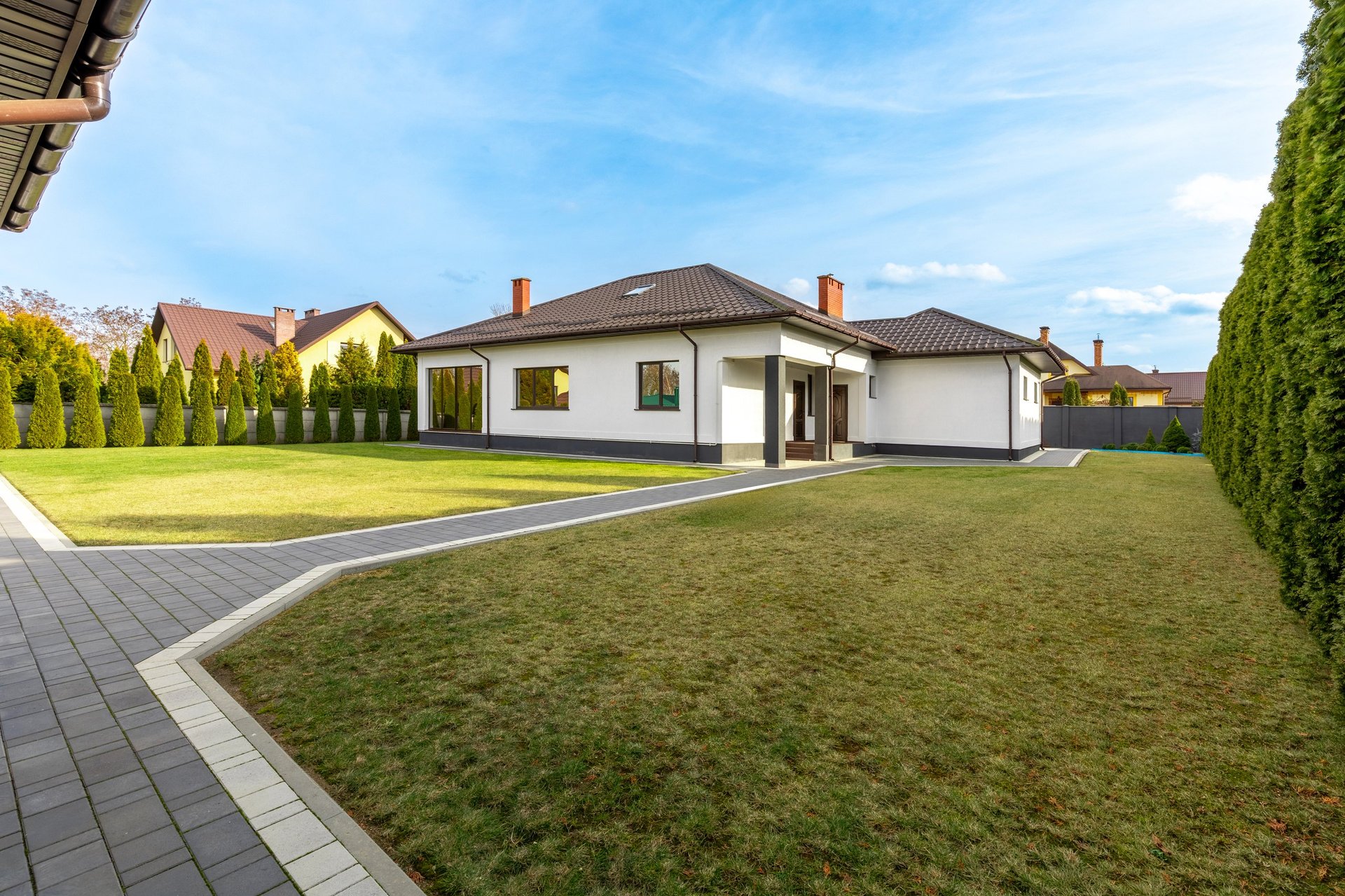
A modern suburban house with a brown roof, large green lawn, and a paved walkway, surrounded by a well-maintained hedge.
Market Guide

What Makes a Home Appreciate Faster in Eastern Pennsylvania?

School districts, walkability, commercial investment corridors, and the improvements that actually return value — a practical framework for buyers and sellers in the Lehigh Valley and Berks County.

CT
Chris Troxell Team
| August 2026 | 11 min read

Not all homes appreciate at the same rate, even in a strong market like Eastern Pennsylvania. The factors that most reliably separate fast appreciators from slow movers are school district quality, proximity to commercial investment corridors, walkability to daily amenities, lot size relative to neighborhood norms, and finished living space. Sellers deciding what to improve before listing and buyers choosing between similar properties in the Lehigh Valley and Berks County markets both benefit from understanding which variables actually move prices and which upgrades return meaningful value at resale. This guide draws on 2026 cost-versus-value data and Lehigh Valley-specific market dynamics to give you a practical framework for both.

The Lehigh Valley's median home price hit a record $375,000 in May 2026, up 8.7% year over year. Berks County's median reached $292,000, up 3.9%. Across Eastern Pennsylvania, the market has been moving in one direction for several years. But within these strong regional numbers, individual properties have appreciated very differently depending on where they sit and what they offer.

A home in the Parkland School District has appreciated differently from a comparable home in a lower-ranked district across the road. A property two blocks from Emmaus Borough's walkable Main Street has behaved differently from one two miles out. A house adjacent to the Wyomissing Knitting Mills campus has different demand dynamics from one on the far edge of the borough.

Understanding what drives those differences is useful whether you're choosing between two properties as a buyer or deciding what to fix before listing as a seller. Here are the factors that consistently matter most in Eastern Pennsylvania.

School District Quality: The Most Powerful Driver of Sustained Appreciation

Across decades of research and across Eastern Pennsylvania specifically, school district quality is the single most reliable predictor of sustained home appreciation. Homes in high-performing districts attract a larger, more consistent buyer pool, sell faster and hold their value better during downturns. Properties in top-ranked districts like Parkland, Southern Lehigh, Wilson Area, East Penn and Wyomissing Area have shown stronger appreciation trajectories than comparable homes in lower-ranked districts, and that premium compounds over time.

The effect operates at the street level in ways that often surprise buyers. Two houses on the same road, four houses apart, can be in different school districts and carry meaningfully different market values as a result. In the Lehigh Valley, the boundary between the Parkland and Allentown school districts, or between Southern Lehigh and Saucon Valley, can represent a $30,000 to $70,000 difference in sale price for otherwise similar homes at similar square footages.

For buyers: always verify the school district assignment for any specific address, not just the general area. For sellers: if your property is in a top-tier district, making sure that information is prominently positioned in your listing is one of the highest-return marketing decisions you can make.

One specific dynamic worth watching: school redistricting. When district boundaries shift, properties that were just outside a desirable district can gain significant value by being drawn in. Conversely, properties drawn out of a premium district can soften. If a major redistricting process is underway in a market you're evaluating, understanding the proposed boundary changes before you buy is worth the time.

Walkability to Daily Amenities: How It Plays Out in the Lehigh Valley and Berks County

Walkability has become one of the stronger pricing drivers in residential real estate nationally, and Eastern Pennsylvania is not immune to this trend. Homes within walking distance of a genuine commercial corridor, a grocery store, a coffee shop, a park or a transit stop consistently command premiums over otherwise similar homes that require a car for every errand.

In the Lehigh Valley and Berks County, walkability premium shows up most clearly in a handful of specific locations. Emmaus Borough, where Main Street has independent restaurants, a library and a farmers market within a short walk of most residential addresses, consistently commands higher per-square-foot pricing than comparable homes at the suburban edges of the East Penn School District. Bethlehem's North Side, with its Main Street corridor and historic streetscape, carries a walkability premium over other Bethlehem locations with identical school district access. Wyomissing's proximity to both Wyomissing Creek parkland and the Penn Avenue commercial corridor contributes meaningfully to its pricing relative to other Berks County suburbs.

The flip side is also true. A property that is technically within a premium school district but isolated from walkable amenities by arterial roads or commercial corridors will price differently from one that combines both advantages. When evaluating two properties in the same district at similar prices, the walkability difference is often the most useful variable for predicting relative appreciation.

Commercial Investment Corridors: What the NIZ and Wyomissing Knitting Mills Mean for Nearby Homes

Sustained commercial investment in a defined corridor raises nearby residential values, and Eastern Pennsylvania has two of the most visible current examples of this dynamic.

Allentown's Neighborhood Improvement Zone has generated $1.2 billion in development since 2012, transforming the downtown core and the Lehigh River waterfront. The collar neighborhoods immediately adjacent to the NIZ, including Old Allentown and Jordan Heights, have benefited from improved downtown activity, better foot traffic and the positive perception effects of a revitalized urban core. Properties in these neighborhoods that combine their own historic character with NIZ adjacency have shown stronger appreciation than comparable properties further from the downtown. As the NIZ's Waterfront project adds residential and retail development along the river's western bank, the appreciation effect is likely to extend into new areas of the city.

In Wyomissing, the Knitting Mills campus redevelopment by Equus Capital Partners has brought Tower Health, UGI Energy Services, Teleflex and Sly Fox Brewing into a former outlet center, creating a genuine employment hub adjacent to residential neighborhoods. Properties within easy walking or driving distance of the Knitting Mills have benefited from the employment activity, the retail and dining additions and the overall quality signal that a $70 million institutional investment sends about the area's trajectory.

For buyers evaluating properties in these corridors: proximity to a major commercial investment is a positive signal for long-term appreciation, but it needs to be combined with the other factors on this list. A property that is NIZ-adjacent but in a lower-ranked school district, with limited walkability to daily amenities, will appreciate differently from one that combines all three advantages.

Lot Size Sweet Spots: When Bigger Is Better and When It Isn't

Lot size affects appreciation, but the relationship is more nuanced than bigger is always better. In Eastern Pennsylvania, two market contexts produce different lot size dynamics.

In urban and walkable suburban boroughs like Emmaus, Bethlehem's North Side and Old Allentown, modest lots are the norm and the premium goes to walkability and architectural character rather than yard size. An oversized lot in a dense walkable neighborhood doesn't generate the appreciation premium it might in a more suburban context, because buyers in those markets are paying for proximity and character rather than outdoor space.

In suburban corridors like Upper Macungie Township, Center Valley and the South Whitehall areas within the Parkland School District, lot size matters more. Properties at the low end of the lot size range for the neighborhood can be harder to sell and appreciate more slowly than lots at or above the neighborhood median. But there's also a ceiling: extremely large lots in suburban contexts don't generate proportional appreciation because they carry higher maintenance obligations that price-conscious buyers discount.

The practical guidance for buyers: avoid the smallest lots in any given neighborhood, as they consistently underperform on appreciation. Being at or above the neighborhood median for lot size is a stronger position than being at the bottom. But paying a large premium for an exceptionally large lot in a suburban context is rarely justified by the appreciation return.

The Home Improvements That Actually Return Value in 2026

The 2025 Cost vs. Value Report, which aggregates data from real contractors and appraisers across hundreds of US markets including Pennsylvania, tells a consistent story: exterior improvements and minor interior refreshes outperform full gut renovations on pure return. Here are the numbers that matter for Eastern Pennsylvania sellers.

Project Estimated ROI Notes for Eastern PA Market
Garage door replacement ~268% Consistently the top-returning single project nationally for two consecutive years
Manufactured stone veneer (exterior) 90%+ Signals quality to buyers; high visual impact at modest cost ($10k to $15k partial install)
Minor kitchen remodel (reface, hardware, countertops) 96% to 113% One of the highest-returning interior projects; major gut renovation returns only 40 to 60%
Refinishing hardwood floors ~147% Highest ROI of any single interior project; extremely common in older Lehigh Valley and Berks County homes
Fresh interior paint (neutral colors) High Most common pre-listing project; buyers discount dated or bold colors quickly
Minor bathroom update (vanity, fixtures, lighting) 71 to 80% Mid-range remodels beat upscale ones consistently; avoid luxury additions if resale is the goal
Curb appeal (mulch, landscaping, power washing) Very high Buyers form first impressions before entering; low cost, high impact
Finished basement 50 to 70% Adds livable square footage that buyers value; returns less than exterior projects but broadens buyer pool
Major kitchen or bathroom gut renovation 40 to 60% Costs rarely recover in full; better for lifestyle than for sale strategy

The pattern in the data is consistent and worth internalizing: refresh rather than gut if resale is the primary goal. A minor kitchen update, refinished floors, fresh paint, a new garage door and strong curb appeal will return more at sale than a luxury primary bathroom addition. The most expensive project is rarely the highest-returning one.

How to Use These Factors When Choosing Between Similar Properties

When two properties look similar on paper, the factors above are the most useful tools for predicting which one will appreciate faster.

Start with school district. If both properties are in the same district, move to the next variable. If they're in different districts, that difference will likely be the dominant factor in long-term appreciation, and it's worth understanding the performance gap between the two districts before you decide price is the primary consideration.

Check walkability at the address level, not just the neighborhood level. Walk Score is a useful starting point, but walking the block is the better test. Is there a continuous sidewalk network? Are the nearby amenities ones that buyers consistently value: a coffee shop, a park, a grocery store within walking distance? Does the street feel like a place people walk, or like a place they drive through?

Understand the lot position. Is this property at the lower end of the lot size range for its immediate neighborhood, or at or above median? The smallest lots in a given neighborhood consistently underperform on appreciation. If two comparable properties have the same asking price and one has a notably smaller lot, that discount is there for a reason.

Look for commercial investment signals nearby. A major employer, a significant retail redevelopment, an arts district or a transit anchor within walking or easy driving distance tends to support residential values over the medium term. None of these are guarantees, but they're better indicators of sustained demand than absence of investment.

Finally, assess the improvement opportunity. A property that is cosmetically dated but structurally sound in a premium location is often a better purchase than a fully renovated property in a less advantaged location, because you can add the cosmetic value yourself and capture the appreciation from the location. A property that has had high-end renovations in a weaker location cannot recover those renovation costs through appreciation.
Frequently Asked Questions

Want to Know What Your Specific Home Is Worth Right Now?

The factors in this guide explain the general picture. What they can't do is tell you exactly how they apply to your specific property on your specific street in your specific market. The Chris Troxell Team tracks sales data across every Lehigh Valley and Berks County submarket, and we can give you a precise current valuation based on what buyers are actually paying for comparable homes right now, not what an algorithm estimates.