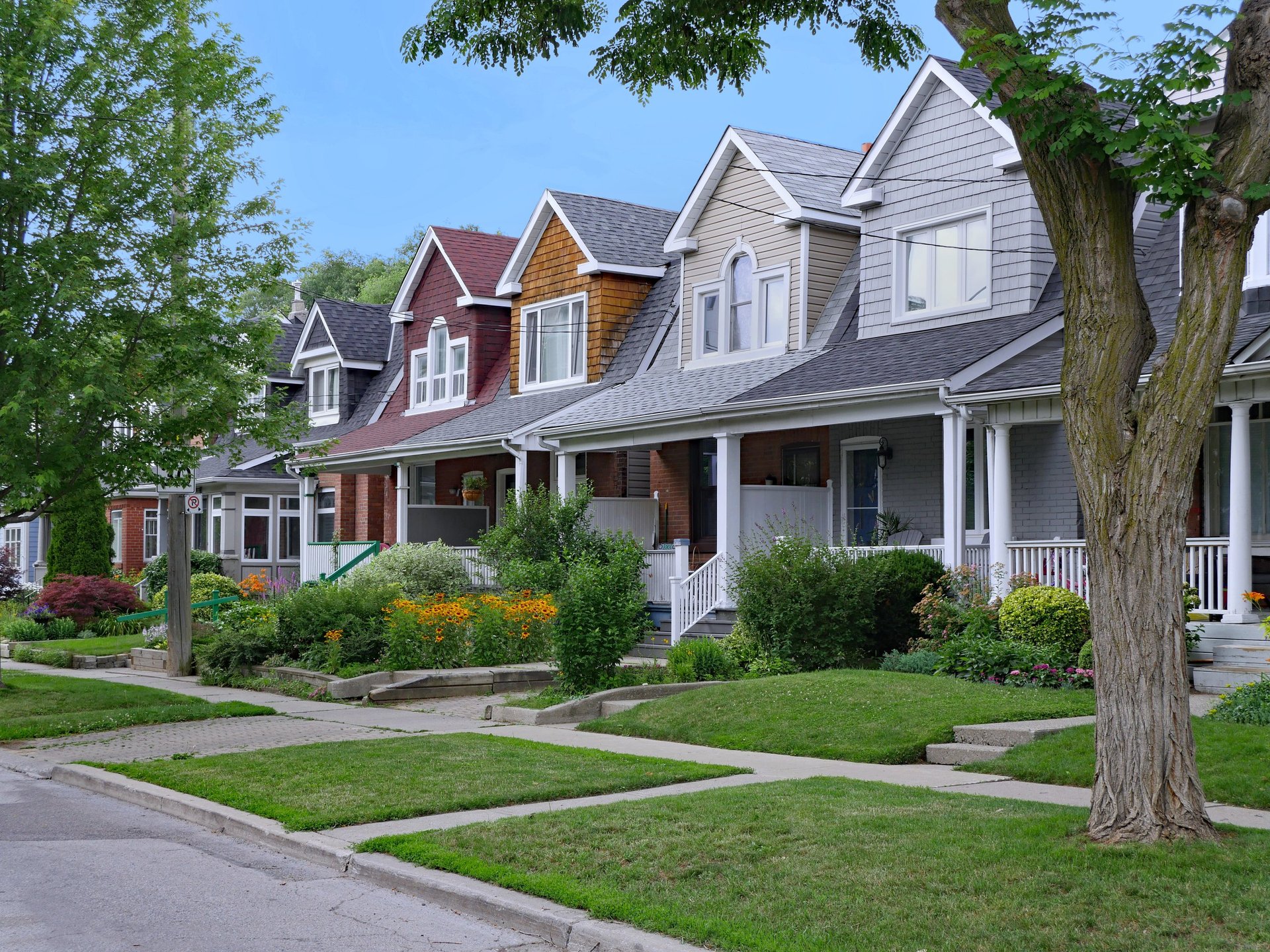
Residential street with small semi-detached houses with gable dormer windows
First-Time Buyers Guide

The First-Time Buyer's Real Talk Guide to the Lehigh Valley

Buying your first home in 2026 means navigating a competitive market with a $375,000 regional median and homes going pending in under two weeks. The process is manageable when you understand it — without the jargon.

CT
Chris Troxell Team
| September 2026 | First-Time Buyers

Buying your first home in the Lehigh Valley in 2026 means navigating a competitive market with a regional median sale price of $375,000 and homes going pending in under two weeks in many neighborhoods. The process is manageable when you understand it. Pre-approval is non-negotiable before you start looking. Closing costs in Pennsylvania average around 2.3% of the purchase price for buyers, though the transfer tax varies by municipality. Neighborhoods like Allentown's West End, South Side Bethlehem and parts of Easton offer realistic entry points at $275,000 to $350,000. This guide explains the process the way a knowledgeable friend would, without the jargon.

The Honest Picture of the Lehigh Valley Market Right Now

Nobody tells you that buying your first home feels a lot like learning a new language while also making the biggest financial decision of your life. The terminology is unfamiliar. The timelines are unclear. And everyone around you seems to know what earnest money or contingencies mean, but nobody wants to admit they looked it up five minutes ago.

So let's skip the formal tone and just talk through it. The Lehigh Valley is a competitive market, but it is not an impossible one for first-time buyers. You just need to go in with a clear head about what the process looks like, what things actually cost and which neighborhoods are genuinely within reach.

The Lehigh Valley's regional median sale price hit $375,000 in May 2026, which sounds daunting. But that number covers everything from a four-bedroom colonial in South Whitehall to a studio apartment in downtown Allentown. For first-time buyers working with a budget between $275,000 and $375,000, there is real inventory out there. It just takes some patience and, frankly, some speed when the right property shows up.

The other honest piece is that the market is still moving fast. Well-priced homes in desirable neighborhoods are going under contract in seven to fourteen days, sometimes faster. That does not mean you are going to lose every home you love. It means you cannot spend three weekends deciding whether you like a neighborhood before you look at a single listing. Coming in prepared makes the difference between someone who buys a home in six weeks and someone who is still looking six months later.

One thing that is genuinely working in first-time buyers' favor right now: there are more new listings coming to market compared to a year ago, and some of the frantic pace of 2021 and 2022 has calmed. You may not have to waive your inspection or offer $30,000 over asking to get a home. In the right neighborhood at the right price point, a clean, well-prepared offer can still win.

What Pre-Approval Actually Involves and Why It Matters

Before you do anything else, get pre-approved. Not pre-qualified. Pre-approved. The difference matters more than most people realize.

Pre-qualification is a quick estimate based on what you tell a lender about your income and debts. It takes about ten minutes and means almost nothing to a seller. Pre-approval, on the other hand, involves actually submitting your financial documents: W-2s, recent pay stubs, bank statements and tax returns. The lender verifies everything and pulls a full credit report. What comes out the other end is a letter stating exactly how much they will lend you. That letter is what sellers and their agents actually pay attention to.

For an even stronger position, ask your lender about a fully underwritten pre-approval. This means the underwriting team has already reviewed your file, not just a loan officer. It speeds up the closing process significantly once your offer is accepted, and it signals to sellers that your financing is essentially done. In a competitive situation, that distinction can be the difference between your offer and someone else's.

Your credit score matters here. Most conventional loan programs want to see a score of at least 620, though 660 or higher opens up better interest rates and more program options. If your score needs work, a lender can usually tell you the specific steps to get there in three to six months. Ask about this well before you start looking at houses.

What Closing Costs Actually Look Like in Pennsylvania

Closing costs are the part of the homebuying process that tends to catch first-timers off guard, mostly because they focus on saving for the down payment and forget that closing day comes with a separate bill.

In Pennsylvania, buyers typically pay 2% to 3.5% of the purchase price in closing costs, on top of the down payment. On a $325,000 home, that works out to roughly $6,500 to $11,000. The biggest single item is usually the transfer tax, which in most of the Lehigh Valley runs to 2% of the purchase price, split evenly between buyer and seller, so you are paying 1% of the purchase price. Allentown is the exception: the city raised its transfer tax to 2.5% at the start of 2026, so buyers there pay a bit more than in Bethlehem or Easton.

Beyond the transfer tax, the other main items are lender fees, title insurance, the appraisal, and prepaid items like homeowner's insurance and the initial property tax escrow. None of these is huge on its own. Together, though, they add up to a number you should budget for before you go under contract.

A useful thing to know: you can sometimes negotiate seller concessions toward closing costs, particularly on properties that have been sitting on the market for a while. Your agent can advise you on when this is realistic in the current market.

Also worth mentioning: Pennsylvania has first-time buyer assistance programs through the Pennsylvania Housing Finance Agency (PHFA) that can help with down payments and closing costs for eligible buyers. Income limits apply, and you need to apply through an approved lender, but it is worth checking whether you qualify before you assume you have to cover everything yourself.

Which Lehigh Valley Neighborhoods Are Realistic at a First-Time Buyer Budget

At a budget between $275,000 and $375,000, here is where the realistic opportunities are in 2026.

Allentown

The broadest entry-level inventory in the Lehigh Valley. The West End has walkable streets, mature trees and some of the best park access in the city, with homes in the $300,000 to $380,000 range — though the most competitive listings go quickly. South Allentown and areas near Muhlenberg College offer more accessible price points for flexible buyers.

South Side Bethlehem

Increasingly desirable thanks to SteelStacks and the growing restaurant and arts corridor. There are still row homes and twins in the $280,000 to $360,000 range for buyers willing to do some updating. The North Side's historic district commands more, but the edges of the neighborhood offer occasional opportunities at accessible prices.

Easton & Outer Townships

The West Ward and South Side neighborhoods of Easton have genuine value for buyers not deterred by a neighborhood in transition. College Hill has moved up in price, but is worth watching for the right listing. Forks Township and Palmer Township, just outside the city, offer newer construction and quieter streets if you don't want urban density.

Macungie & Emmaus

Both in the East Penn School District, these communities are popular with first-time buyers who prioritize school district quality. The median has climbed, but you can still find properties in the low-to-mid $300,000s that need cosmetic work. If the school district matters to you and your budget is closer to $300,000, these communities are worth keeping on your list.

What Happens in a Multiple-Offer Situation

At some point, you will probably find yourself in a multiple-offer situation. Here is what actually happens and what you can do about it.

When a seller receives more than one offer, they typically review all of them and either accept the strongest one outright or issue what's called a "best and final" request, asking each buyer to submit their highest and best offer by a certain deadline. Your agent will advise you on what to do at that stage based on the specific situation.

Price matters, obviously. But sellers also care about terms. A shorter closing timeline, a larger earnest money deposit or a willingness to be flexible on the possession date can all make your offer more attractive even if it is not the highest number on the table. Your pre-approval strength matters here too. A seller who gets two offers at the same price will typically lean toward the buyer with the stronger financing.

Whether to include an inspection contingency comes up in competitive situations. The inspection contingency protects your right to walk away if the inspection uncovers serious problems. Waiving it is a risk that some buyers take in very competitive markets, but it is not something to do casually. For most first-time buyers, keeping the inspection contingency is the right call. There are ways to make your offer competitive without giving up that protection entirely, and your agent can talk you through them.

The Home Inspection Conversation Nobody Prepares You For

Once your offer is accepted, you will schedule a home inspection. This is not a pass-fail test. Almost every home, including brand-new construction, will have a list of items at the end of the inspection report. The question is not whether there are any issues. It is whether there are issues that matter.

Your inspector will walk through the property for a few hours and produce a detailed report covering the roof, foundation, HVAC, plumbing, electrical and more. Some items will be minor: a door that sticks, a bathroom caulk line that needs refreshing. Others might be significant: an aging roof, outdated electrical panels or evidence of water infiltration. The significant ones are what you pay attention to.

After the inspection, you can negotiate with the seller to address the major items. This might mean asking them to fix something before closing, asking for a credit toward your closing costs or adjusting the purchase price. Sellers do not have to agree to everything, and in a competitive market they have more leverage. But a reasonable ask on a genuine structural or safety issue is almost always worth making.

One piece of practical advice: choose your inspector carefully. Ask your agent for recommendations based on who they have seen do thorough work. A good inspector will take the time to explain what they are finding as they go, so you leave the inspection with a real understanding of the property rather than just a PDF.
A Few Things Most First-Time Buyers Wish They Had Known Earlier

After working with a lot of first-time buyers across the Lehigh Valley, a few things come up consistently.

The Zillow estimate is not the market value

Automated valuations are based on algorithms and often lag behind the actual market by months. In a fast-moving market like the Lehigh Valley, a home's actual sale price can differ substantially from what any platform estimated. Trust your agent's comparative market analysis over any online number.

Budget for move-in costs too

After the down payment and closing costs, there are still the moving truck, any immediate repairs, new locks, a lawnmower if you are buying a house with a yard, and the inevitable first-week purchases at a home improvement store. None of these are enormous, but together they add up to a few thousand dollars that many buyers do not anticipate.

No big financial moves between pre-approval and closing

No new car loans. No switching jobs without telling your lender immediately. No large transfers into or out of your bank account without documentation. Lenders re-verify your financial situation before closing, and changes can delay or derail your loan.

Your first home doesn't have to be your forever home

A lot of first-time buyers put pressure on themselves to find the perfect property. In reality, building equity in a good home for five to seven years and then moving up is a completely valid strategy, and it takes some of the pressure off the initial decision. You are not married to this house. You are just starting to build.

Frequently Asked Questions

Ready to Take the First Step?

The best thing you can do right now is have a real conversation about where you stand and what is realistic at your budget in this market. The Chris Troxell Team works with first-time buyers across the Lehigh Valley regularly. We can tell you which neighborhoods fit your budget, connect you with lenders we trust and make sure you are ready to move when the right home comes up.