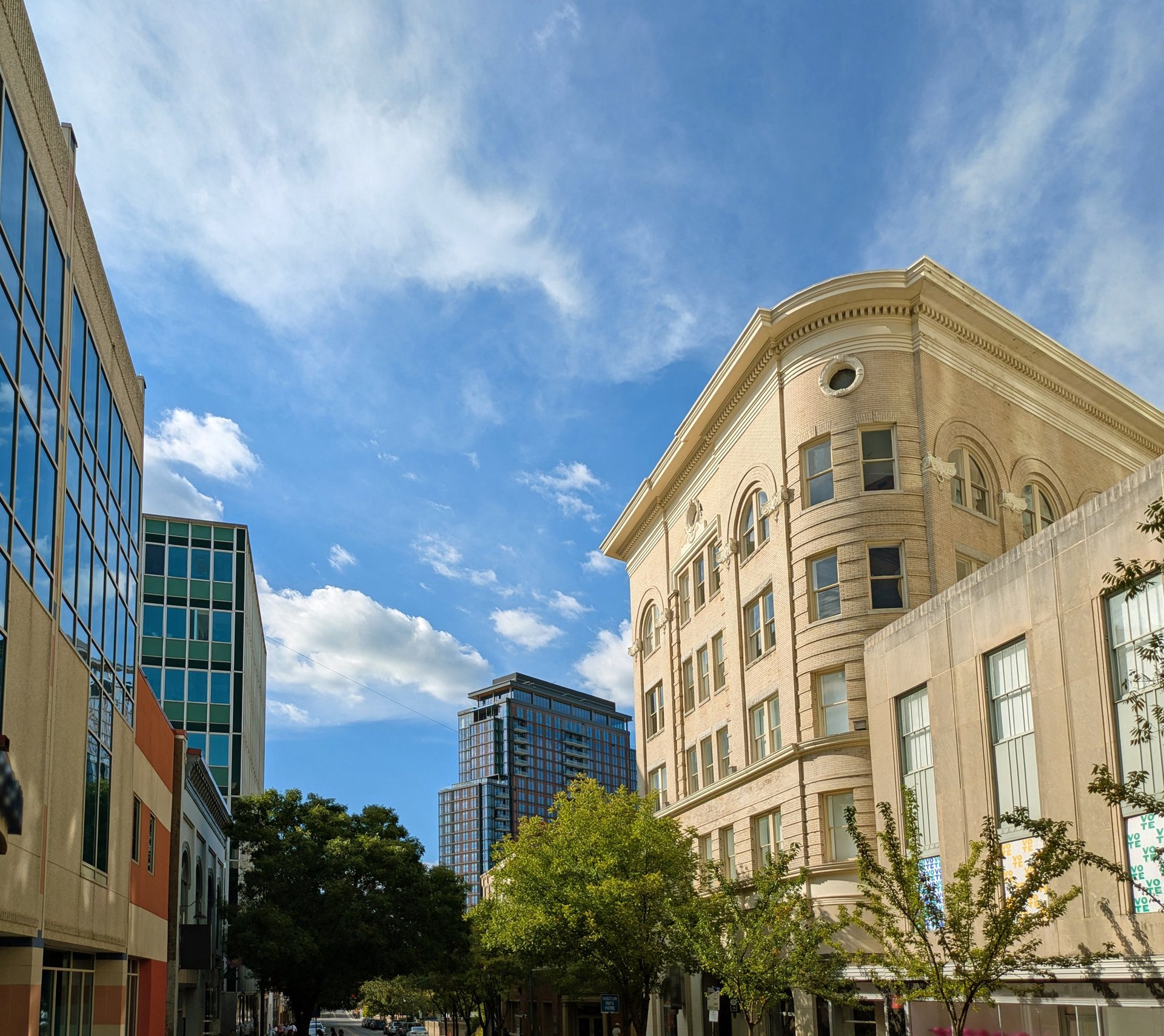
Main Street in downtown Durham North Carolina with a mix of modern and classic architecture
City Comparison

Bethlehem vs. Allentown

Which City Should You Actually Choose?

Five miles apart, but genuinely different places to live. An honest, data-driven comparison for buyers weighing the two Lehigh Valley cities.

CT
Chris Troxell Team
| September 2026 | Bethlehem & Allentown Real Estate

Allentown and Bethlehem are five miles apart and share a highway grid, a school system landscape and a regional economy, but they are genuinely different places to live. Allentown is Pennsylvania's third-largest city at around 128,000 people, with a lower median home price (roughly $255,000 to $303,000 depending on the source), a more diverse commercial base and a downtown undergoing sustained NIZ-driven reinvestment. Bethlehem is smaller at around 74,000 to 76,000 residents, with a stronger historic identity, higher median home values (around $303,000 to $342,000), a more established cultural calendar and neighborhoods that tend to perform better on safety metrics. Both are legitimate choices. Picking the right one comes down to your budget, your lifestyle and which version of urban Lehigh Valley living actually fits you.

People who have never been to the Lehigh Valley sometimes treat Allentown and Bethlehem as interchangeable, as if they were just two names for the same general area. People who have spent time in both cities find that comparison a little funny. They are neighbors in the most literal sense, but they have distinct personalities, distinct price points and distinct communities. The choice between them is a real one.

Neither city is the obvious right answer. Allentown is more affordable and more diverse, with a genuinely revitalizing downtown and a wider range of entry-level options. Bethlehem has stronger historic identity, slightly better safety metrics, a more established cultural calendar and a price premium that reflects all of that. What matters is which version of this choice fits your life.

Allentown vs. Bethlehem: A Quick Reference

Factor Allentown Bethlehem
Population ~128,000 ~74,000 to 76,000
Median home price ~$255,000 to $303,000 ~$303,000 to $342,000
Cost of living index Slightly above national avg Slightly below national avg
Walk Score (city) 67 (moderately walkable) Varies significantly by neighborhood
School district Allentown SD (large urban district) Bethlehem Area SD (large urban district)
Avg 1-bed rent ~$1,500 to $1,700/mo ~$1,850/mo
Cultural anchor NIZ / PPL Center / downtown revival SteelStacks / Moravian Historic District / Main Street
Safety vs national avg Crime score 19 (better than 19% of US cities) Crime score 23 (better than 23% of US cities)
Universities Muhlenberg College, Cedar Crest College Lehigh University, Moravian University

Price: What Your Money Gets You in Each City

The gap between the two cities is real but not enormous. Allentown median home prices run roughly $255,000 to $303,000 depending on the source and time period, reflecting a wider range of neighborhoods and property types. Bethlehem's median sits closer to $303,000 to $342,000, with the North Side historic district and the better Bethlehem Township addresses pulling toward the top of that range.

Allentown

$255K – $303K

More entry-level inventory at sub-$300,000 price points, especially in the West End and neighborhoods adjacent to the downtown corridor. You can still find three-bedroom homes in solid condition for under $300,000.

Bethlehem

$303K – $342K

A premium that reflects stronger historic character and slightly higher safety metrics, plus a supply constraint. The move-up buyer who wants space often ends up in Bethlehem Township rather than city proper.

One cost consideration buyers sometimes miss: Allentown raised its transfer tax to 2.5% in 2026, which means buyers pay 1.25% of the purchase price in transfer tax at closing, slightly more than in most other Lehigh Valley municipalities. Bethlehem runs at the more typical 2% combined rate. On a $325,000 purchase, the difference is about $800. Worth knowing, not a dealbreaker.

Neighborhoods: The Parts of Each City That Actually Matter

Both cities have strong neighborhoods and weaker ones, sometimes in close proximity. The citywide averages on price and safety tell you something, but they do not tell you what living on a specific block in a specific neighborhood actually feels like.

Allentown

The neighborhoods that consistently attract buyers looking for the strongest combination of character, walkability and stability are the West End and the streets around Trexler Park and Cedar Beach — mature trees, brick homes, park access and Parkland School District adjacency.

Downtown Allentown, particularly near the NIZ corridor and PPL Center, attracts a different buyer: urban-oriented, younger, interested in the cultural energy of a revitalizing city center.

South Allentown and East Allentown are more accessible on price but require more block-by-block research.

Bethlehem

The North Side is the most coveted address: the Moravian Historic District, the streets around Main Street and the blocks closest to Moravian University carry real premiums and real architectural character.

The South Side has its own distinct appeal, anchored by SteelStacks, Lehigh University and a growing restaurant and arts corridor along 3rd and 4th Streets. Prices are more accessible than the North Side, and the energy has been building consistently.

Fountain Hill, adjacent to the city's western edge, offers more suburban character at prices below the North Side.

Schools: What Buyers Need to Understand Before Committing

This is the section where the citywide comparison breaks down most thoroughly, because the most important school districts in both cities are not the city school districts at all.

The Allentown School District and the Bethlehem Area School District are both large urban districts with variable school-by-school performance. Neither ranks among the top tier in the Lehigh Valley. Families who prioritize school district quality and are looking in either city almost always end up targeting specific school district boundaries rather than the city itself.

For Allentown Buyers

That typically means the West End streets that cross into South Whitehall Township and the Parkland School District — the top-ranked district in the Lehigh Valley.

For Bethlehem Buyers

It often means Bethlehem Township to the east, targeting Saucon Valley to the south, or the Freedom and Liberty high school feeders within BASD that have stronger performance profiles.

The Practical Advice

The practical advice is the same for both cities: know the specific district assignment for any address you are serious about before you make an offer. Do not assume that buying in Allentown means Allentown School District or that buying in Bethlehem means Bethlehem Area. District boundaries follow township lines, not city limits, and a ten-minute drive can put you in a completely different district.

Safety: A Nuanced Look at What the Data Actually Shows

Both cities have neighborhoods that are genuinely safe and neighborhoods that require more awareness. Neither is uniformly safe or uniformly dangerous, and the citywide statistics tend to overstate the risk in the better neighborhoods.

Allentown

19

Crime score on NeighborhoodScout — safer than 19% of US cities. The crime profile is more varied, with the higher-density core areas pulling citywide numbers up in ways that do not reflect the West End or the suburban periphery.

Bethlehem

23

Crime score on NeighborhoodScout — safer than 23% of US cities. Violent crime rate of 1.5 per 1,000 residents is 58% below the national average of 3.6 per 1,000.

The most useful advice here is the same as for schools: research at the block level, not the city level. The West End of Allentown has a very different crime profile from downtown Allentown. The North Side of Bethlehem has a very different profile from parts of the South Side. Zillow, Redfin and several other platforms now provide neighborhood-level crime overlays. Use them alongside a walking visit at different times of day rather than relying on city-level statistics alone.

Culture and Community Life: What the Cities Feel Like Day to Day

This is where the two cities diverge most noticeably, and for many buyers it ends up being the deciding factor.

Bethlehem's Identity

The Moravian Heritage, the UNESCO World Heritage designation, the National Historic Landmark District on the North Side, SteelStacks on the South Side with Musikfest in August, Christkindlmarkt in winter and a year-round ArtsQuest calendar. Bethlehem does not feel like it is trying to become something. It already is something.

Allentown's Energy

Allentown is further along in its reinvention journey. PPL Center bringing national acts and Phantoms hockey, the NIZ corridor adding restaurant and retail options, the Sidney Kimmel Medical College campus coming to One Center Square in 2026. For buyers who like being part of a story in motion rather than a story already written, that energy is appealing.

Outside the downtown cores, both cities have residential neighborhoods where people live regular lives: they know their neighbors, they walk to the park, they drive to work and they are not particularly thinking about the cultural narrative of the city they live in. The cultural distinction matters most for buyers who will spend significant time in the city itself and who care about the character of the community around them.

Employment and Commute Access

Both cities share roughly the same highway infrastructure and commute picture. I-78, Route 22 and Route 309 are all accessible from either city within a short drive. Lehigh Valley International Airport sits between the two, about equidistant from each. Trans-Bridge Lines buses to New York City depart from both the Bethlehem Transportation Center and the Allentown Transportation Center.

Allentown

The larger commercial base. The NIZ has brought significant office employment into the downtown core. Cedar Crest Boulevard anchors a healthcare and professional services corridor.

Neither Wins

For buyers working within the Lehigh Valley job market, neither city has a clear commute advantage over the other to most major employers.

Bethlehem

Bethlehem's South Side has the advantage of Lehigh University's campus, bringing research, academic employment and a consistently educated population.

Who Ends Up in Allentown and Who Ends Up in Bethlehem

After years of working with buyers across both cities, some clear patterns emerge.

Lands in Allentown

  • First-time buyers who need to maximize what their budget buys.
  • Buyers relocating from higher-cost metros who want as much space as possible.
  • Buyers excited by the downtown revival who want to be part of it.
  • Buyers targeting Parkland School District access from the West End.

Lands in Bethlehem

  • Buyers who prioritize established community character and walkable historic identity.
  • Buyers who value the cultural calendar and want to live close to SteelStacks or the North Side corridor.
  • Buyers stepping up in budget who want a neighborhood that holds its value reliably.
  • Buyers who want the South Side's urban energy at a more accessible price than the North Side.

The Third Group

There is also a third group: buyers who compare both cities carefully and end up in neither, choosing instead one of the suburban communities just outside each city where school districts are stronger, lots are larger and the urban trade-offs disappear. That is a completely valid conclusion, and it is one the data often supports for families with school-age children.

Frequently Asked Questions

Still Deciding? Let's Talk Through It.

The best way to resolve this comparison is to spend a Saturday in both cities. Walk the North Side of Bethlehem in the morning, then drive to Allentown's West End in the afternoon and walk Trexler Park. If you can manage an evening in each, even better. By the end of the weekend most buyers have a clear gut feeling about which city is theirs.

Once you know which direction you are leaning, the Chris Troxell Team can show you what is currently on the market at your budget and help you understand which specific neighborhoods and streets represent the best combination of value and quality in that city right now.