Neighborhood Guide
Is Allentown's West End Worth the Hype? A Neighborhood Guide for Buyers
CT
Chris Troxell Team
Ask almost anyone who covers Allentown real estate which neighborhood consistently punches above its weight, and you'll hear the same answer: the West End.
It's not hard to see why. The West End sits at a sweet spot that's genuinely difficult to find in the Lehigh Valley — established architecture, walkable parks, Parkland School District access, and a price point that still makes financial sense for buyers who'd be stretching into the $500s or $600s elsewhere. It has the bones of a neighborhood that was built to last and, increasingly, buyers are figuring that out.
Which is exactly why it's gotten competitive.
The West End isn't a formally drawn neighborhood with hard borders. Locals generally use it to describe the residential area of west Allentown roughly bounded by 19th Street to the east, Cedar Crest Boulevard to the west, and running north of Tilghman Street toward the South Whitehall Township line. It's a larger area than it sometimes feels and the character shifts meaningfully as you move through it.
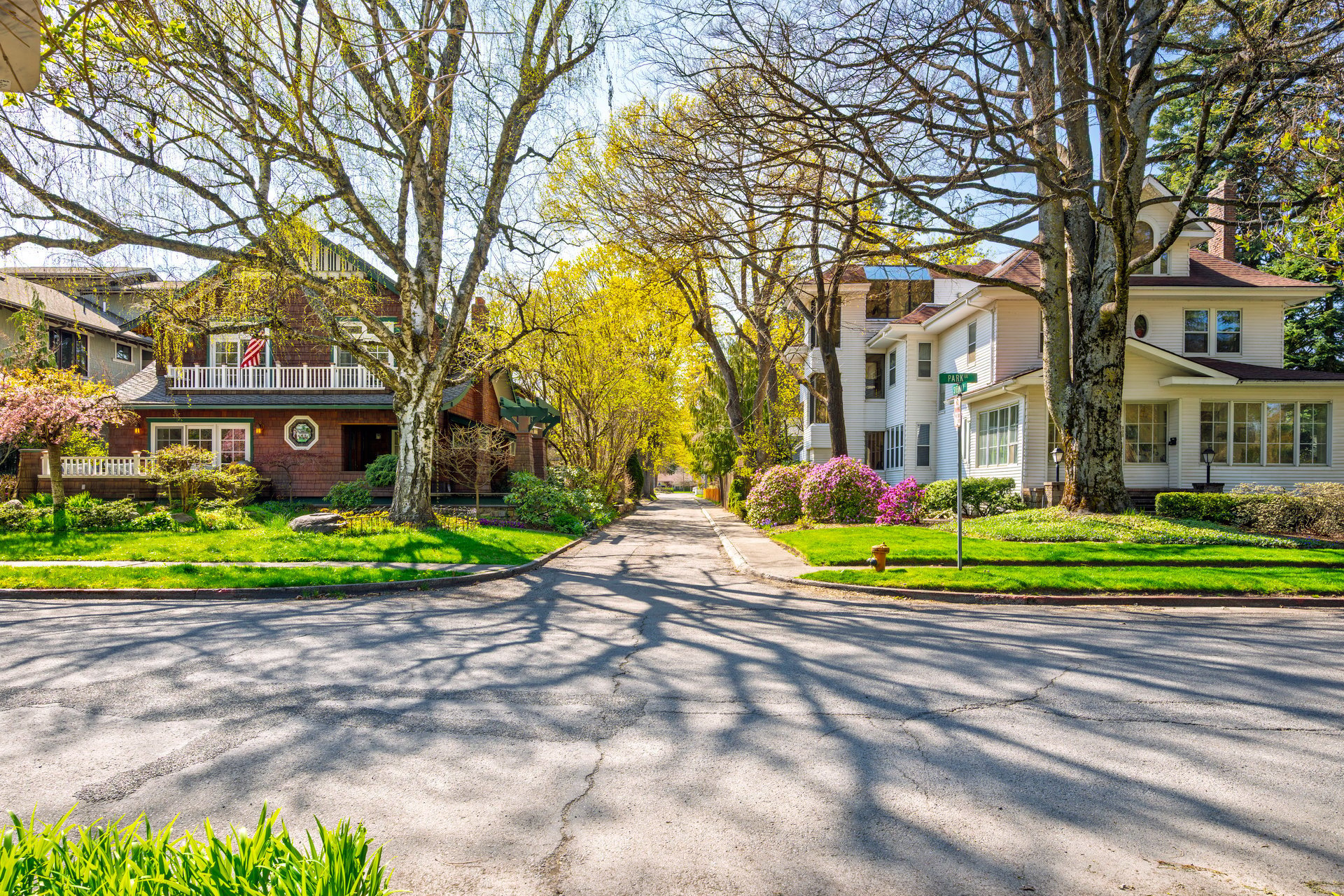
The core of the West End (the streets closest to Muhlenberg College and Cedar Beach Park) is the most sought after. Wide, tree-lined streets, early-to-mid-twentieth-century single-family homes and a neighborhood feel that doesn't require much imagination. Further out toward Cedar Crest Boulevard, you get more ranch-style homes from the 1950s and 60s, which tend to be a bit larger and sit on slightly bigger lots.
The western edge of the West End, technically across into South Whitehall Township, operates as part of the same market and has the added benefit of sitting clearly within the Parkland School District — a distinction that matters a great deal to buyers with school-age children.
The West End has an unusually diverse mix of home types for a single neighborhood, which is part of its appeal. Depending on what you're looking for, you might be competing for:
Built mostly between the 1920s and 1940s, these tend to have solid bones, good ceiling heights, hardwood floors under the carpet if you're lucky, and modest but usable yards. They sit on tree-lined streets and photograph well. Prices generally start around $250,000 and run to the low $300s depending on condition and block.
Charming, cozy, and efficient. The Cape Cod style is well-represented here, priced between roughly $250,000 and $350,000. These attract first-time buyers and downsizers in equal measure.
More common in the western reaches of the neighborhood, typically from the 1950s through the 1970s. A good ranch in the West End will run $300,000 to $400,000, with the better-maintained and updated examples pushing toward the top of that range.
Less common, but they exist, particularly near Trexler Park and along some of the wider streets closer to Cedar Crest Boulevard. Well-updated examples have transacted in the $400s and occasionally above.
The median sale price across the West End has been running in the low-to-mid $300s, up around 6% year-over-year — solid appreciation by any measure.
Price and architecture only get you so far. The reason the West End holds its value is what surrounds the homes.
One of the genuinely great urban parks in Pennsylvania — a 1,500-acre expanse of walking and running trails, a lake, a historic cabin, and open green space that doesn't feel like a city park at all. The full loop trail runs about three miles. On a Saturday morning in June, it's busy in the way that good parks are busy — joggers, families with strollers, cyclists, people walking dogs.
The summer heart of the neighborhood. Basketball courts, sand volleyball, a swimming pool, a large playground, and access to the Cedar Creek Path, which connects through to the Malcolm Gross Rose Garden. For families with kids, this is a major quality-of-life consideration that doesn't show up in the price per square foot.
Muhlenberg College anchors the neighborhood's eastern edge and brings the kind of institutional stability (well-maintained grounds, consistent foot traffic, arts programming) that neighborhoods benefit from without always acknowledging. The Civic Theatre of Allentown sits nearby as well, making this corridor one of the more culturally active parts of the city.
Cedar Crest Boulevard runs along the western edge and gives residents fast access to Lehigh Valley Hospital–Cedar Crest, Cedar Crest College, Wegmans and the full suite of West End commercial amenities, without having to drive through the city to get there.
One of the things buyers ask most when they start looking in the West End is which school district applies to which streets. The honest answer is that it depends on where exactly you're looking.
Properties within Allentown city limits are served by the Allentown School District. Properties in South Whitehall Township, which covers a significant portion of what people think of as the "West End" market, fall into the Parkland School District. Parkland is one of the most highly regarded districts in Lehigh County, with nearly 10,000 students and a track record that matters to buyers planning to stay for a decade or more.
This distinction can affect both what you pay and how quickly a property moves. Parkland-zoned homes in the West End corridor tend to attract more competitive interest. If school district is a priority for you, it's worth being specific about which streets you're targeting rather than assuming the whole neighborhood falls under one district.
The West End is not a hidden gem anymore. Redfin's compete score for the neighborhood has been running at 93 out of 100, meaning it's about as competitive as residential markets get. Homes have been going pending in under a week, frequently receiving multiple offers and selling at or modestly above list price.
That doesn't mean it's impossible to buy here; it means you need to be ready to move when something comes up. Pre-approval in hand, an agent who can show quickly, and an offer strategy that accounts for the likelihood of competition. The buyers who lose in this market are typically the ones who need three days to decide.
Inventory is genuinely tight. In any given month, there are a handful of active listings, and the best ones are often gone before the weekend is over.
The West End makes a lot of sense for a specific kind of buyer — someone who values established neighborhood character over new construction finishes, wants access to great parks and walkability, and either has school-age children who'll benefit from Parkland District access or doesn't need to worry about that at all.
It's a harder fit for buyers who want brand-new appliances and an open-plan kitchen straight off the lot, or who need a three-car garage and half an acre. Those buyers tend to be better served further out in the suburbs.
If the West End profile fits yours, the main challenge isn't deciding whether to buy there; it's being ready when the right property shows up.
The West End moves fast — and buyers who succeed here are the ones who are prepared before the listing hits the market.
If you're considering buying a home in the Lehigh Valley, the Chris Troxell Team can help you navigate the West End's competitive landscape — from pre-approval strategy to a winning offer.